Summary of Guernsey's structuring options - the advantages of cellular structures
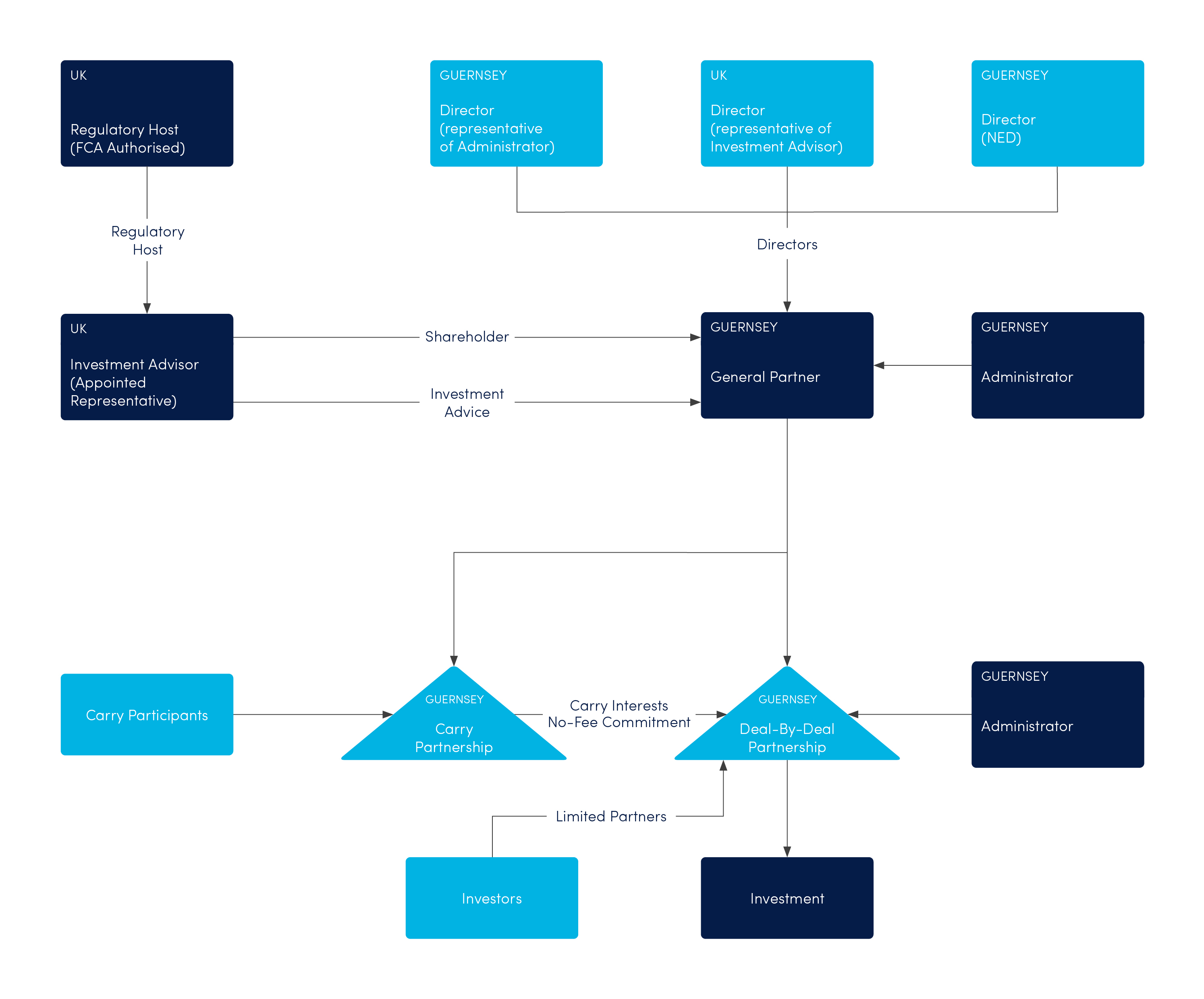
This is the classic "GP/LP" structure.
A non-cellular Guernsey company acts as general partner.
The investment vehicle is a non-cellular Guernsey limited partnership.
Investors make commitments to the limited partnership as limited partners.
The limited partnership acquires investments.
All of these Guernsey entities can be established on a same-day basis, on standard terms.
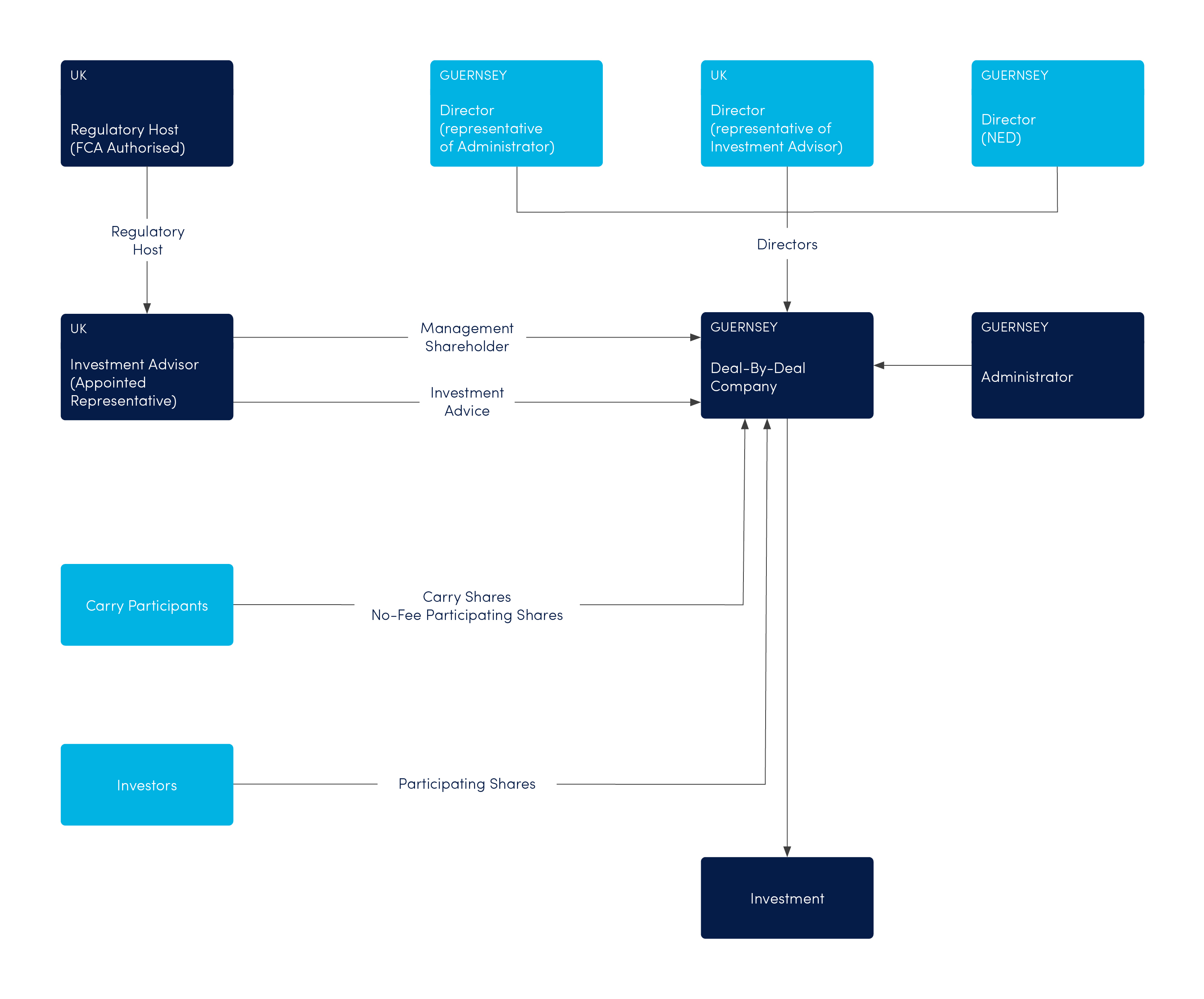
This is the corporate equivalent of the GP/LP structure.
The investment vehicle is a non-cellular Guernsey company.
Investors subscribe for participating share classes.
The company acquires investments.
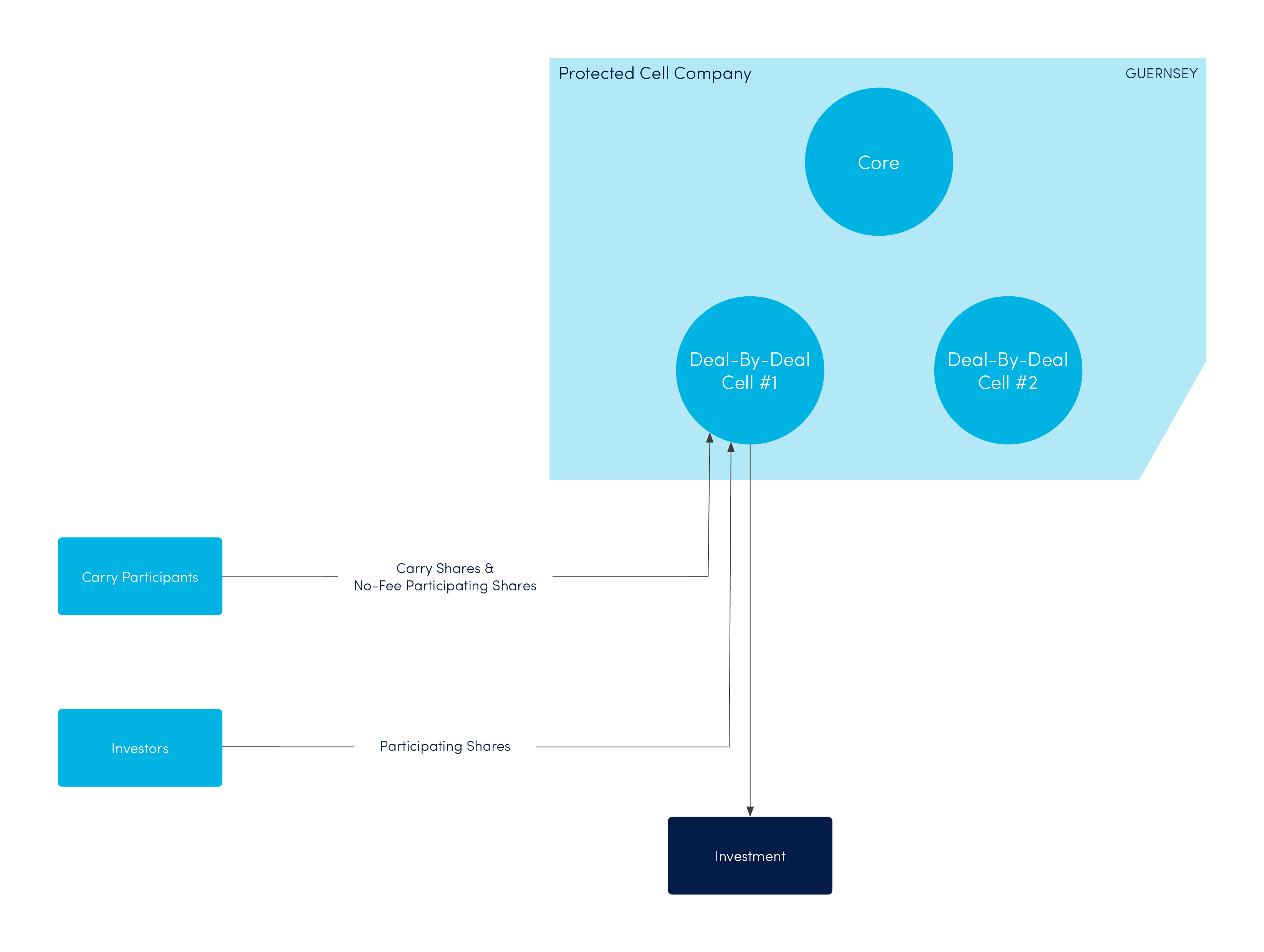
This is a corporate structure using a cellular company – a protected cell company (a "PCC"). A PCC is a single company with a single registration and a single board of directors. The only difference from a non-cellular company is that specific assets can be ringfenced, with statutory protections.
The investment vehicle is a single PCC.
Investors subscribe for participating share classes issued by a specific "cell".
The PCC acquires investments which are attributed to a specific cell'
The returns of the shares issued by a cell corresponding to the returns of the assets held by that cell. Each cell is "protected" – the assets of that cell cannot be claimed by the creditors of another cell.
Cells are created, and shares issued, by board resolution. This can be done on a same day basis.
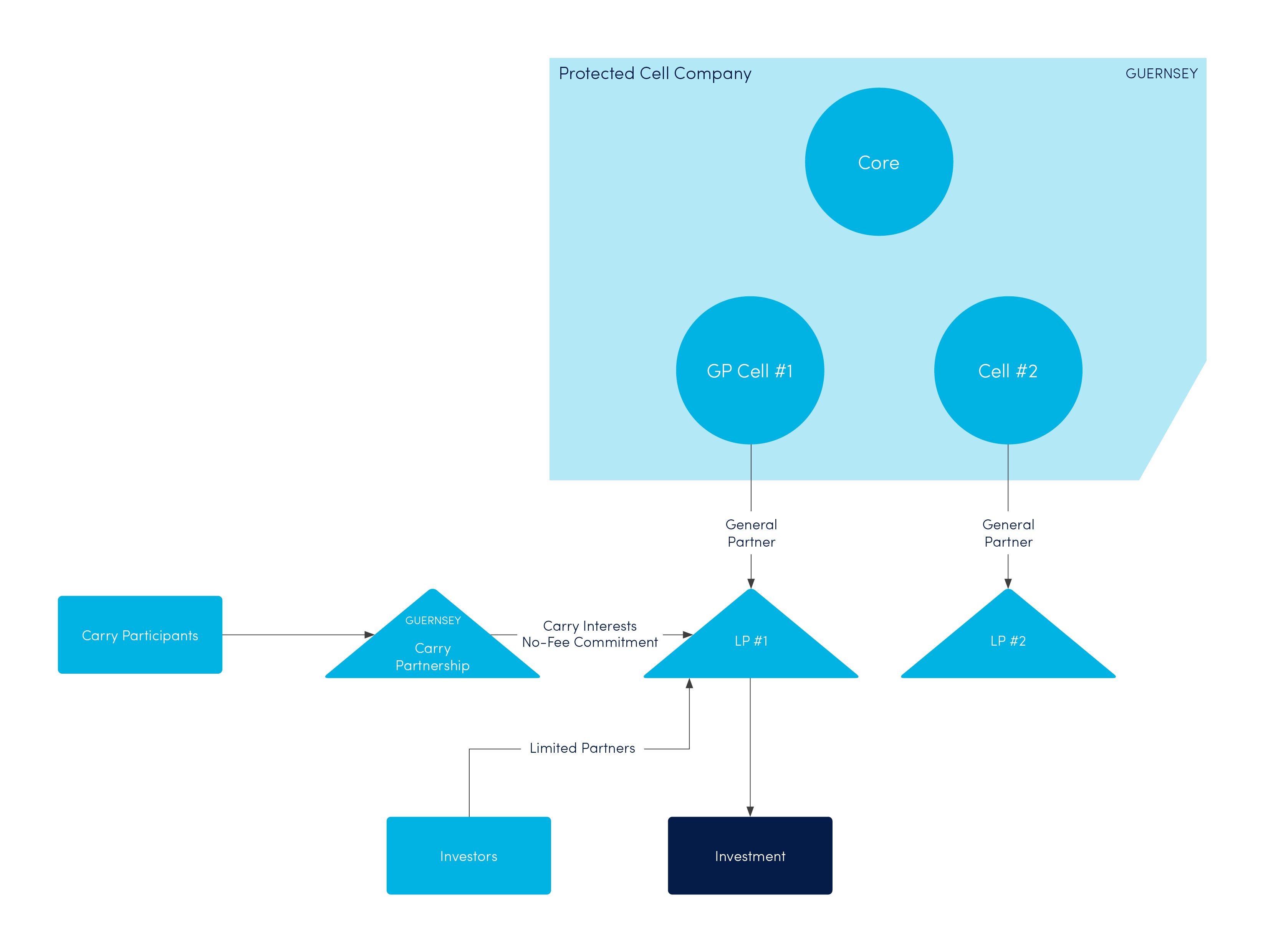
This structure takes advantage of the flexibility and versatility of a PCC.
A single PCC acts as general partner
The investment vehicles are non-cellular Guernsey limited partnerships which have separate cells of the PCC as general partner
Investors make commitments to a limited partnership as limited partners.
The limited partnerships acquire investments.
A new limited partnership is used for each investment, but a separate protected cell of the same PCC is used to act as general partner of each limited partnership.
A simple board resolution of the PCC is passed to create a new cell and establish the limited partnership. This can be done on a same day basis.
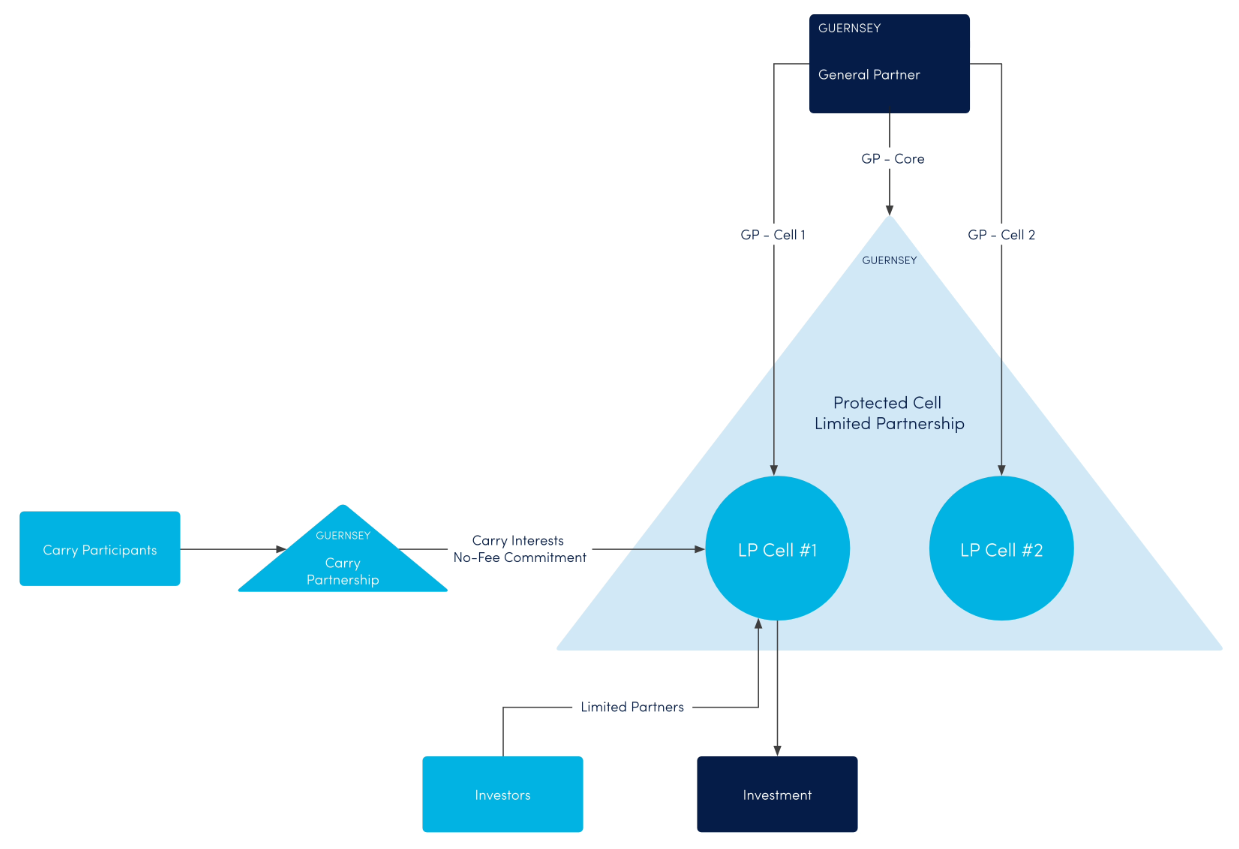
This structure takes advantage of the flexibility and versatility of a protected cell limited partnership (a "PCLP"). A PCLP is the limited partnership-equivalent of a PCC. A PCLP is a single limited partnership with a single registration. Like a PCC, the only difference from a non-cellular limited partnership is that specific assets can be ringfenced, with statutory protections.
A single non-cellular company acts as general partner.
The investment vehicle is a single PCLP.
Investors make commitments to a specific cell of the limited partnership as limited partners.
The PCLP acquires investments which are attributed to a specific cell.
A simple board resolution of the general partner is passed to create a new cell of the limited partnership. This can be done on a same day basis.
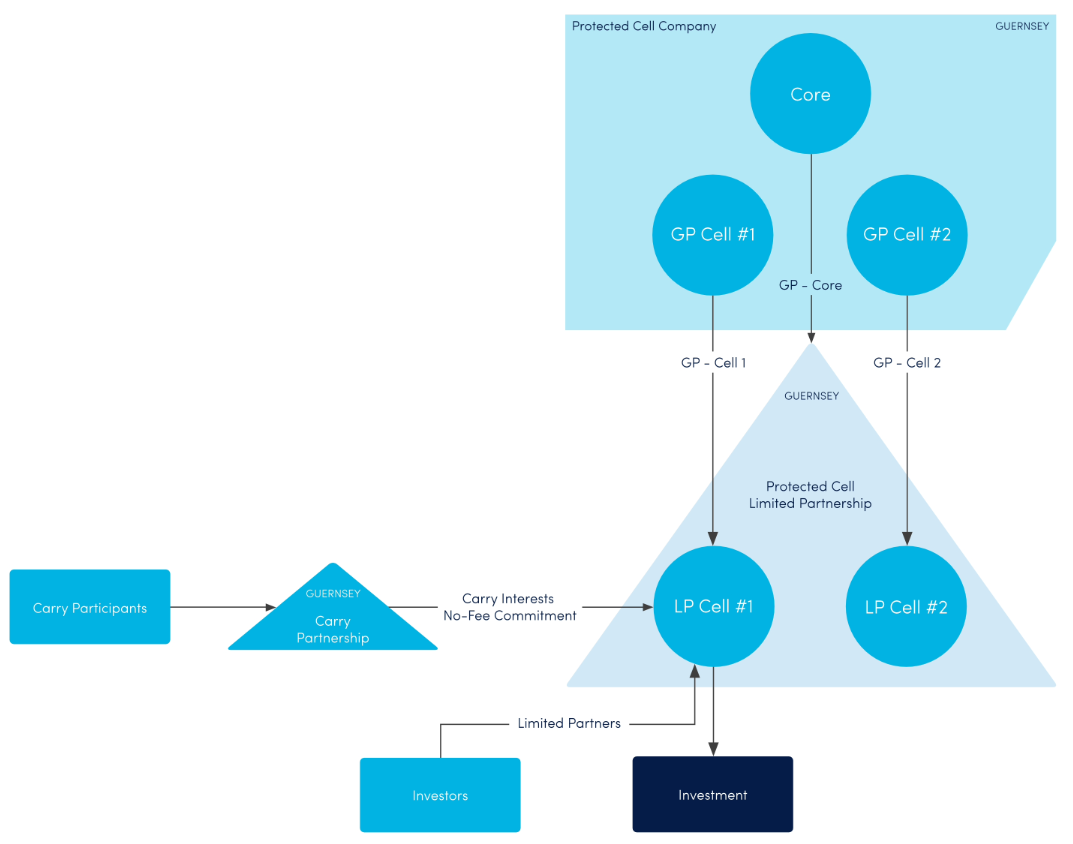
This structure takes advantage of the flexibility and versatility of a both a PCC and a PCLP
A single PCC acts as general partner.
The investment vehicle is a single PCLP which has separate cells of the PCC as general partner of each cell of the PCLP.
Investors make commitments to a specific cell of the limited partnership as limited partners.
The PCLP acquires investments which are attributed to a specific cell.
A simple board resolution of the PCC is passed to create:
A new cell of the PCC; and
Create a new cell of the limited partnership.
This can be done on a same day basis.
Frequently asked questions
常见问题解答
What is the difference between a Protected Cell Company (PCC) and a non-cellular company in Guernsey?
A PCC is a single company with a single registration and single board of directors, identical to a non-cellular company except that specific assets can be ringfenced with statutory protections. Each cell within a PCC is protected, meaning the assets of one cell cannot be claimed by creditors of another cell, while maintaining operational efficiency through unified governance.
How quickly can Guernsey investment structures be established?
All standard Guernsey structures can be established on a same-day basis. This includes non-cellular companies, non-cellular limited partnerships, new cells within PCCs or PCLPs, and combinations thereof. Cell creation and share issuance require only a board resolution, enabling rapid deployment of new investment vehicles.
What is a Protected Cell Limited Partnership (PCLP) and how does it differ from a PCC?
A PCLP is the limited partnership equivalent of a PCC. It is a single limited partnership with a single registration that allows specific assets to be ringfenced with statutory protections, identical to how a PCC operates. The key difference is the underlying structure: a PCLP uses the limited partnership format rather than the corporate format of a PCC.
What are the key structural differences between GP/LP structures and corporate investment vehicles in Guernsey?
In a GP/LP structure, a non-cellular company acts as general partner while investors make commitments as limited partners to a limited partnership. In the corporate equivalent, investors subscribe for participating share classes in a non-cellular company directly. Both structures can acquire investments, but differ in investor participation mechanism: commitments versus share subscriptions.
How do combined PCC and PCLP structures provide operational flexibility?
Combined PCC/PCLP structures allow a single PCC to act as general partner, with separate cells of the PCC serving as general partner for individual cells of the PCLP. Investors commit to specific cells of the limited partnership, with investments attributed to corresponding cells. A single board resolution creates both a new PCC cell and new PCLP cell simultaneously on a same-day basis, maximizing structural flexibility and efficiency.
Key Contacts主要联系人
Annette Alexander
Annette Alexander
+44 (0)1481 732067
Email Annette
电邮 Annette Alexander

Christopher Anderson
Christopher Anderson
+44 (0)1481 741537
Email Christopher
电邮 Christopher Anderson
Matthew Brehaut
Matthew Brehaut
+44 (0)20 7614 5620
Email Matthew
电邮 Matthew Brehaut
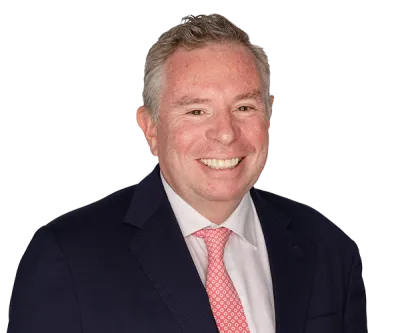
Tom Carey
Tom Carey
+44 (0)1481 741559
Email Tom
电邮 Tom Carey
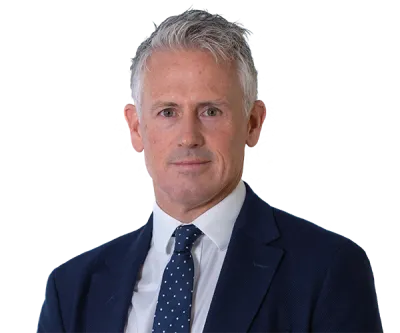
David Crosland
David Crosland
+44 (0)1481 741556
Email David
电邮 David Crosland
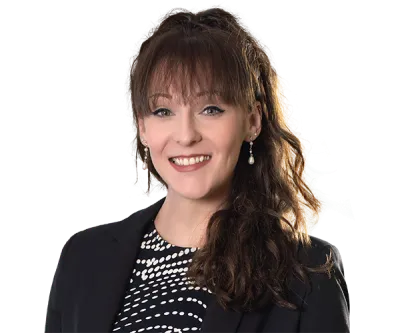
Rachel de la Haye
Rachel de la Haye
+44 (0)1481 741506
Email Rachel
电邮 Rachel de la Haye

Tony Lane
Tony Lane
+44 (0)1481 732086
Email Tony
电邮 Tony Lane

Ben Morgan
Ben Morgan
+44 (0)1481 741557
Email Ben
电邮 Ben Morgan
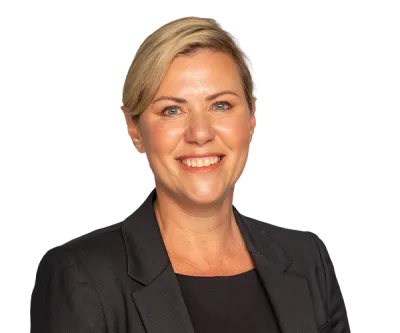
Kim Paiva
+44 (0)1481 732057
Email Kim
电邮