Guernsey investment funds - Spring 2026 update
Our investment funds team outline the latest developments within the investment funds market in Guernsey, including the Monterey Insight report results and the commission's growth agenda.
Monterey Insight report results
Carey Olsen has again been confirmed as the leading legal adviser to the Guernsey investment funds sector in the 31st edition of Monterey Insight's Guernsey Fund Report.
The report shows that Carey Olsen advised on 80% of new fund launches serviced by Guernsey law firms from June 2024 to June 2025, accounting for 92% of the funds' total assets under management ("AUM").
As of 30 June 2025, Carey Olsen advises 1,064 funds with a total asset value of more than US$422 billion, 866 more funds than the nearest competitor. Of these, 886 are Guernsey-domiciled funds. The firm now advises on more than 69.4% of all Guernsey-domiciled funds, which together make up 82.9% of the Guernsey-domiciled fund market by AUM.
Separately to Monterey, the Guernsey Financial Services Commission (the "Commission") has published research highlighting that Guernsey-related investment businesses now manage or administer more than £1 trillion in assets globally. Extending beyond the investment funds sector, the findings reinforce Guernsey's position as a leading financial centre and a domicile of choice for international investment structures.
AIFMD II – makes Guernsey more attractive as a domicile for funds and fund managers
The Alternative Investment Fund Managers Directive II ("AIFMD II") significantly increases the burdens imposed on EU domiciled managers ("EU AIFMs") of alternative investment funds ("AIFs"). Guernsey managers (as Non-EU AIFMs) avoid the additional obligations of AIFMD II, save for expanded reporting and disclosure requirements (which apply to both EU and Non-EU AIFMs).
Guernsey managers may continue to raise capital from EU professional investors via national private placement rules ("NPPR"), largely unaffected by AIFMD II.
AIFMD II therefore further enhances the attractiveness of Guernsey as a domicile for funds and fund managers when compared with the regulatory burdens of establishing in the EU.
We believe that the most efficient way to raise capital from EU markets – both before and after the implementation of AIFMD II – is to establish your fund in Guernsey and access EU capital markets through NPPR.
See here our detailed briefing on the key changes made by AIFMD II and why AIFMD II enhances the attractiveness of Guernsey as a domicile for funds and fund managers.
GFSC attitude to defence technology funds
Carey Olsen has recently fielded various enquiries in relation to establishing defence funds (i.e. funds aimed at supporting military research, development, and procurement) in Guernsey and the Commission has provided some useful input in that regard:
- there needs to be clear criteria on acceptable and unacceptable assets in which the fund may invest;
- if the manager is to be Guernsey based, the business risk assessment should be detailed and specific to the risks faced, with particular emphasis on countering the financing of terrorism, counter-proliferation financing and compliance with Guernsey’s obligations in respect of United Nations, UK, Bailiwick and other sanctions regimes;
- details need to be provided to the Commission about the measures being put in place by the Guernsey administrator to manage the risks arising given the nature of the asset class. Also, consider whether the relevant employees of the fund's Guernsey administrator would need to be provided with any additional specific training in relation to the administration and oversight of a defence fund;
- state whether there are any international agreements or protocols or commonly agreed international standards that the fund will adhere to for the purposes of investment, such as (for example) the United Nations Convention on Certain Conventional Weapons; and
- consider how any independent non-executive directors of the fund (or its general partner if a limited partnership) are able to provide appropriate challenge in discussions around the board's decisions, given that the nature of a defence fund's investments is likely to be out of scope of their expertise and not comparable with investments made by other types of funds in connection with which they may hold directorships.
Opening up of the family private investment fund
A private investment fund ("PIF") is a class of Guernsey regulated collective investment scheme which are private in nature and are not permitted to be widely promoted to the general public. A PIF is required to appoint a designated administrator which must be licensed under The Protection of Investors (Bailiwick of Guernsey) Law, 2020 ("POI Law"). Typically, this will be an appropriately licensed administration firm in Guernsey.
A Family PIF is a category of PIF whereby all investors must share a family relationship or be an eligible employee of the family (this includes employees of a family office structure). In recognition of the fact the type of investors who might wish to establish and invest in a Family PIF will often be clients of administration firms in the fiduciary sector, but that such firms would be unable to administer a Family PIF without also holding a licence under the POI Law, as of 15 October 2025, the Commission launched a new limited licence under the POI Law, making it easier for fiduciary firms to administer Family PIFs.
The Commission currently charges a reduced annual licence fee of £1,000 for this type of licence. Whilst holders of a limited POI Law licence must comply with the POI Law in the same manner as any other POI Law licensee, certain rules will be modified given the restricted nature of the investment activities which may be undertaken. Further details may be found in the Commission's guidance note here.
Commission's growth agenda
The Commission’s Director General, William Mason, has set out a pro-growth and pragmatic regulatory agenda that puts economic prosperity and financial stability ahead of the precautionary principle.
In a recent speech entitled "Enabling Growth – Digital and Sustainable Finance", Mr Mason made key points including:
on sustainable finance:
- there are no plans to impose mandatory ISSB/IFRS sustainability disclosure standards in the foreseeable future;
- a new guidance note on anti-greenwashing was scheduled (published on 1 February 2026 and available here), making clear that existing licensing criteria already prohibits greenwashing so new rules are not necessary; and
- the Commission’s proposals to broaden the Finance Sector Code of Corporate Governance to require boards to consider environmental matters holistically rather than narrowly focus on net zero.
on digital finance:
- there would be a consultation paper (published in December 2025 and available here) on regulatory changes to support tokenisation, stablecoins and digital asset custody;
- encouragement for widespread adoption of artificial intelligence (AI) across all financial sectors, warning that failure to automate manual processes risks obsolescence; and
- rebranding of the innovation "soundbox" as a fully-fledged sandbox complemented by an enhanced concierge service for firms wishing to launch innovative products or services.
A copy of the speech is available here.
Working guide to fund finance
Carey Olsen Guernsey (and Jersey) have recently contributed a chapter to Brickfield's "The Working Guide to Fund Finance", which is available here.
Investment statistics for Q3 2025
The total net asset value of Guernsey funds at the end of the quarter was £272.8 billion, an increase over the quarter of £1.9 billion (+0.7%). Overthe past year, total net asset values have decreased by £16.0 billion (-5.5%).
Within these totals for Guernsey funds, Guernsey Green Funds held a total net asset value of £4.5 billion at the end of the quarter.
Key Contacts主要联系人
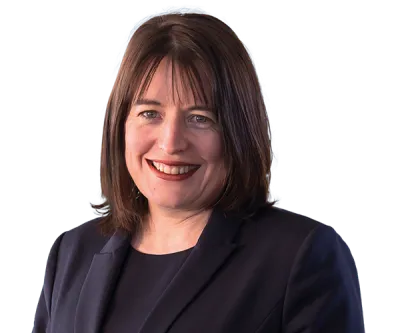
Annette Alexander
Annette Alexander
+44 (0)1481 732067
Email Annette
电邮 Annette Alexander
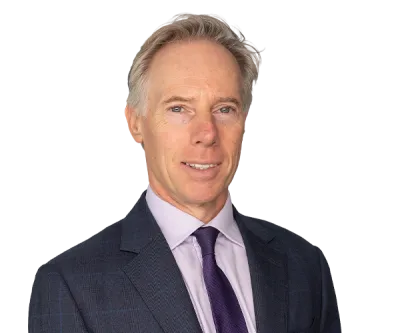
Christopher Anderson
Christopher Anderson
+44 (0)1481 741537
Email Christopher
电邮 Christopher Anderson
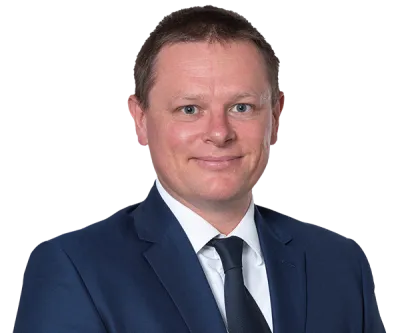
Matthew Brehaut
Matthew Brehaut
+44 (0)20 7614 5620
Email Matthew
电邮 Matthew Brehaut
Tom Carey
Tom Carey
+44 (0)1481 741559
Email Tom
电邮 Tom Carey
David Crosland
David Crosland
+44 (0)1481 741556
Email David
电邮 David Crosland

Rachel de la Haye
Rachel de la Haye
+44 (0)1481 741506
Email Rachel
电邮 Rachel de la Haye
Tony Lane
Tony Lane
+44 (0)1481 732086
Email Tony
电邮 Tony Lane
Ben Morgan
Ben Morgan
+44 (0)1481 741557
Email Ben
电邮 Ben Morgan